

In a November 2025 Harris Poll survey reported by Indeed, 72% of respondents said they preferred interviewing in person. Among those who preferred it, 57% said the visit helped them understand a company’s culture and work environment. A candidate can see where they’d work, meet potential teammates and ask questions that come up while they’re there.
Showing up costs money, though. Among respondents who spent money preparing for an in-person interview, 30% spent at least $100 on their most recent one. That figure includes preparation expenses such as coaching as well as transportation. For a candidate reading an invitation to meet the team, the immediate question may be simpler. “How much of this trip am I expected to pay for?” Read the Indeed survey.
What a recruiter can miss when a candidate declines
In 2025, Google announced plans to bring back at least one round of in-person interviews. For any employer asking candidates to make the trip, the travel policy matters as soon as the invitation goes out. Read the reporting on Google’s plans.
Consider a candidate who would like to meet the team but needs a $500 flight to get there. They might hesitate to ask who pays while they’re still trying to make a good impression. Even if the company promises to reimburse them on Friday, they still need $500 available to book the ticket on Monday. If they decline, the recruiter may never learn why.
A local candidate faces a version of the same decision. They may already be giving up a shift to attend. Knowing the company will cover mileage and parking gives them two fewer expenses to weigh.
Put the travel details in the invitation
Tell candidates what you’ll cover before they commit to a date. Include the policy, with any spending limits and receipt requirements. If your team can book airfare or lodging directly, offer that option to everyone so candidates can use it without having to explain their finances.
Here’s wording a recruiter could adapt for an invitation:
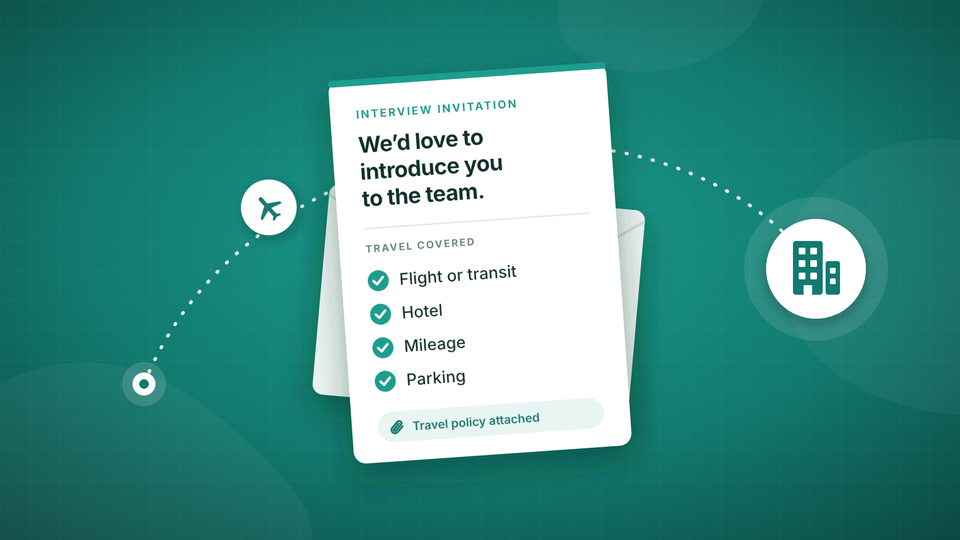
We’d love to introduce you to the team. We’ll cover travel for your interview, including mileage or transit and parking. I’ve attached our policy with spending limits, the receipts to keep and when you can expect payment. If you’ll need a flight or hotel, we can book it for you. Just let me know before you make reservations.
For a starting point on coverage and limits, see Reimbi’s candidate reimbursement guide.
Follow through after the visit
Give candidates one place to submit expenses, tell them when they can expect payment and let them know if a missing receipt will hold it up. On the employer side, decide who approves expenses and who handles payment questions before the first candidate needs an answer.
Reimbursement may be one of the last interactions a candidate has with your company. Someone who didn’t get the offer may still be waiting for their parking reimbursement. If they have to email the recruiter twice to ask about it, that exchange may be what they remember about the interview.
How Reimbi helps
With Reimbi, recruiters can kickoff the reimbursement process in less than 30 seconds. Reimbi distributes a secure link to the candidate to submit expenses and choose how to be reimbursed. Reimbi evaluates the receipts against your customized policy and routes for approval. Reimbi issues the payout directly the same business day it’s approved. No internal AP involvement needed!
Candidates know where to send their expenses and the status of their expense report, recruiters can skip collecting receipts, and Finance has a record of each approval and payout.
